TikTok Addiction: Why You Can't Stop Swiping
TikTok’s average user spends 89 minutes per day on the app. 72% of them watch more content than they intended. Not “a little more.” They opened TikTok for 5 minutes and looked up 45 minutes later wondering where the time went.
You’ve done this. Probably today. The question isn’t whether TikTok is addictive. It’s why TikTok is more addictive than everything else on your phone, and what you can do about it. TikTok is the most refined expression of social media addiction — same mechanics as Instagram and YouTube, tuned harder.
Why TikTok hits harder than the rest
TikTok’s algorithm is the most sophisticated recommendation engine ever built for consumer content. It doesn’t just show you popular videos. Within 30 minutes of using the app, it has a behavioral model of your preferences: what you pause on, what you skip, what you rewatch, what you share, what time of day you’re most susceptible, what emotional state makes you engage longest.
Three design choices make TikTok harder to quit than other social apps:
Ultra-short content loops. Each video is 15-60 seconds. That’s a complete dopamine cycle every minute. Compare this to YouTube (10-20 minute videos) or Netflix (45-minute episodes). TikTok delivers rewards at 10x the frequency. Your brain gets conditioned to that rhythm, and everything slower feels boring by comparison.
No menu, no choice. You don’t browse TikTok. You don’t search. You swipe, and the algorithm decides what you see next. This removes decision fatigue entirely. You’re not choosing content. You’re receiving it. That passivity is what makes time disappear — you’re not making any decisions, so your brain doesn’t register the passing of time.
Variable quality at the perfect ratio. Not every video is good. Most are mediocre. But the algorithm has learned exactly how many mediocre videos to show between the ones that make you laugh, gasp, or feel something. That ratio — the variable-ratio reinforcement schedule — is the exact same mechanism that makes slot machines addictive. You swipe because the next one might be the good one. That’s the engine of doomscrolling — not the content, but the gap before the next hit.
What TikTok addiction does to you
The platform-specific effects go beyond general screen time damage.
Your attention span restructures around 30-second content. A 5-minute YouTube video feels long after weeks of TikTok. A 10-minute article feels impossible. Reading a book becomes genuinely difficult, not because the book is boring but because your dopamine system has been calibrated to a faster pace. This is what people mean when they talk about brain rot — measurable cognitive recalibration, not a vibes-based complaint.
Time perception warps. TikTok sessions consistently last 3-5x longer than users intend. This isn’t a memory problem. It’s a feature of the passive consumption model. Because you’re not making decisions or transitions between content, your brain doesn’t create the temporal markers that help you track time.
Other apps become less satisfying. After a TikTok session, Instagram feels slow. YouTube feels like work. Even Reels and Shorts, which copy TikTok’s format, feel like inferior versions because their algorithms aren’t as precisely calibrated. TikTok raises the bar for what your brain considers stimulating, and everything else falls below it.
TikTok’s own tools don’t help
TikTok has screen time management features. You can set a daily time limit. You can enable “take a break” reminders. You can restrict content.
Only 12% of smartphone users use built-in screen time tools. TikTok’s are even less effective because the company that profits from your attention designed the tools that are supposed to limit it. The “take a break” reminder is a notification you dismiss in half a second. The daily limit has an “extend” button. These features exist for PR and regulatory purposes, not for your benefit. Same logic applies to general phone addiction — the entity profiting from your attention doesn’t get to be the entity protecting it.
What actually works against TikTok
Delete the app. The nuclear option. It works if you don’t reinstall it. 49% of people who try a digital detox come back. If you can survive in the 51%, deletion is the most effective approach. You lose access to TikTok messaging and any creators you only follow there. That’s the cost.
Block TikTok with a strict blocker. AppBlock with Strict Mode prevents you from opening TikTok during scheduled times. The block can’t be disabled during a session. This is useful for work hours and bedtime. It doesn’t help with the 3 hours of scrolling between work and bed.
Add friction. One Sec inserts a breathing exercise before TikTok opens. ScreenZen adds a countdown and daily open limit. Both reduce how often you open the app. Neither helps once you’re inside scrolling.
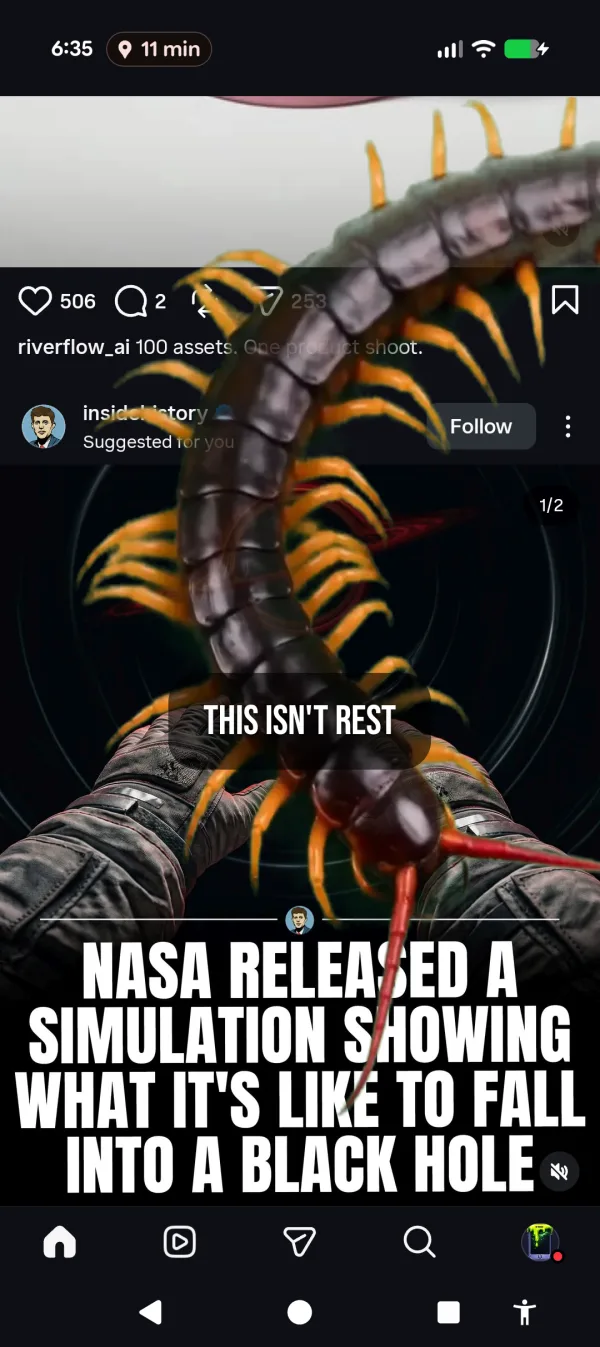
Make TikTok look broken. Cursed Screen doesn’t block TikTok or add friction before you open it. After a grace period, visual overlays creep in from the edges of your screen. Flames. Glass fracturing. Insects. TikTok still plays. The algorithm still serves content. But the experience of watching a cooking video through a screen covered in crawling insects is different from watching it on a clean screen. The compulsion weakens because the reward is contaminated.
This handles TikTok specifically well because TikTok addiction is about extended sessions, not frequent opens. You open TikTok once and stay for 89 minutes. Friction apps catch the opening but miss the marathon. Cursed Screen gets worse throughout the marathon. At minute 10, the overlay is subtle. At minute 30, it’s hard to ignore. At minute 60, your screen is visually hostile. The algorithm can’t override your instinct to stop looking at something that looks wrong.
TikTok still plays. You’re just watching it through a screen the bugs have taken.
Session-based tracking with 3:1 decay means taking a 10-minute break from the phone improves the overlay. The phone actively rewards you for closing TikTok and doing something else, even briefly.
The Reels and Shorts problem
TikTok addiction rarely exists in isolation. If you’re hooked on TikTok, you’re probably also deep in Instagram Reels and YouTube Shorts. The formats are identical. The dopamine mechanisms are the same. The algorithms are converging.
Blocking TikTok without addressing Reels and Shorts just redirects the addiction. You scroll Reels instead. Total short-form video consumption stays the same.
This is another advantage of the visual deterrence approach: it doesn’t target specific apps. The overlay tracks total screen time. Whether you’re on TikTok, Reels, Shorts, or cycling between all three, the overlay gets worse. No blocklist to manage. No per-app configuration. The phone just gets ugly.
Start somewhere
If TikTok is your biggest time sink, here’s a priority order:
- Check your screen time right now. Know the number. The real one.
- Try ScreenZen for a week (free). If the friction reduces your opens, you might not need anything else.
- If you still scroll for 45+ minutes once you’re inside the app, try Cursed Screen. Free trial. Buy once, keep it. It targets the marathon, not the door.
TikTok employs more engineers optimizing for your attention than you have hours in the day. You’re not going to outthink the algorithm. Change what the algorithm delivers into. Make the screen look like the time-sink it is. For the cross-platform playbook on breaking the loop, read how to stop doomscrolling.
Want a tool that does this automatically?
Cursed Screen makes your phone progressively uglier the longer you use it. No blocking, no willpower needed — you'll want to put it down.
Get Cursed Screen on Google Play