Phone Procrastination: Why You Scroll Instead of Doing the Thing
You sit down to work. You open your laptop. You check your phone “for one second.” Forty minutes later you’re watching a stranger organize their refrigerator and you haven’t started the task.
This happens multiple times a day. You know it’s happening. You can’t stop it.
The standard advice is “discipline yourself” or “just put the phone down.” If that worked, you wouldn’t be reading this. Discipline assumes the behavior is a choice. Reaching for your phone instead of working isn’t a choice your conscious brain is making. It’s a neurological escape route that fires automatically when your brain encounters discomfort.
The avoidance loop
Procrastination isn’t laziness. Research on procrastination consistently shows it’s an emotional regulation problem, not a time management problem. You avoid the task because starting the task feels uncomfortable — boring, overwhelming, unclear, anxiety-producing. Your brain seeks immediate relief from that discomfort. Your phone provides it.
The phone is the perfect avoidance tool because it’s always within reach, always ready, and always rewarding. Open Instagram: immediate novel stimuli. Open TikTok: dopamine within 2 seconds. Open Reddit: the illusion of productive research. Every time you pick up the phone instead of starting the task, your brain registers: discomfort avoided, reward received. The pattern strengthens.
Tim Pychyl’s research at Carleton University showed that smartphone use is significantly associated with procrastination, and the relationship is mediated by self-regulation failure. The phone doesn’t cause the procrastination. It provides the most accessible escape route.
Why blocking doesn’t fix procrastination
You’ve probably tried blocking your phone during work hours. AppBlock, Freedom, Focus Mode. Set a schedule, lock the distracting apps, force yourself to work.
Two problems. First, the procrastination isn’t about the phone specifically. Block the phone and you’ll find another escape: cleaning your desk, making coffee, checking email, browsing news sites on your laptop. The phone is the preferred escape, not the only one.
Second, the block expires. You white-knuckle through a 2-hour focus session. The block lifts. You grab your phone and scroll for 45 minutes as compensation. The total time lost might actually increase because the suppressed urge rebounds.
A study on self-control depletion found that sustained restraint depletes the cognitive resource needed for continued restraint. Blocking your phone all morning makes you more likely to binge on it in the afternoon. The math doesn’t work.
What actually reduces phone procrastination
Make the task smaller. You’re not procrastinating on the task. You’re procrastinating on the feeling of starting. “Write the report” feels overwhelming. “Write one sentence of the report” doesn’t. Start with one sentence. Your brain can handle one sentence. Once you’ve started, continuing is easier than starting was. This isn’t a phone fix. It’s a procrastination fix that removes the trigger.
Make the phone less rewarding. This is where most people miss. If the phone delivers less reward, it becomes a less effective escape route. Your brain reaches for it, finds less dopamine, and the avoidance loop weakens.
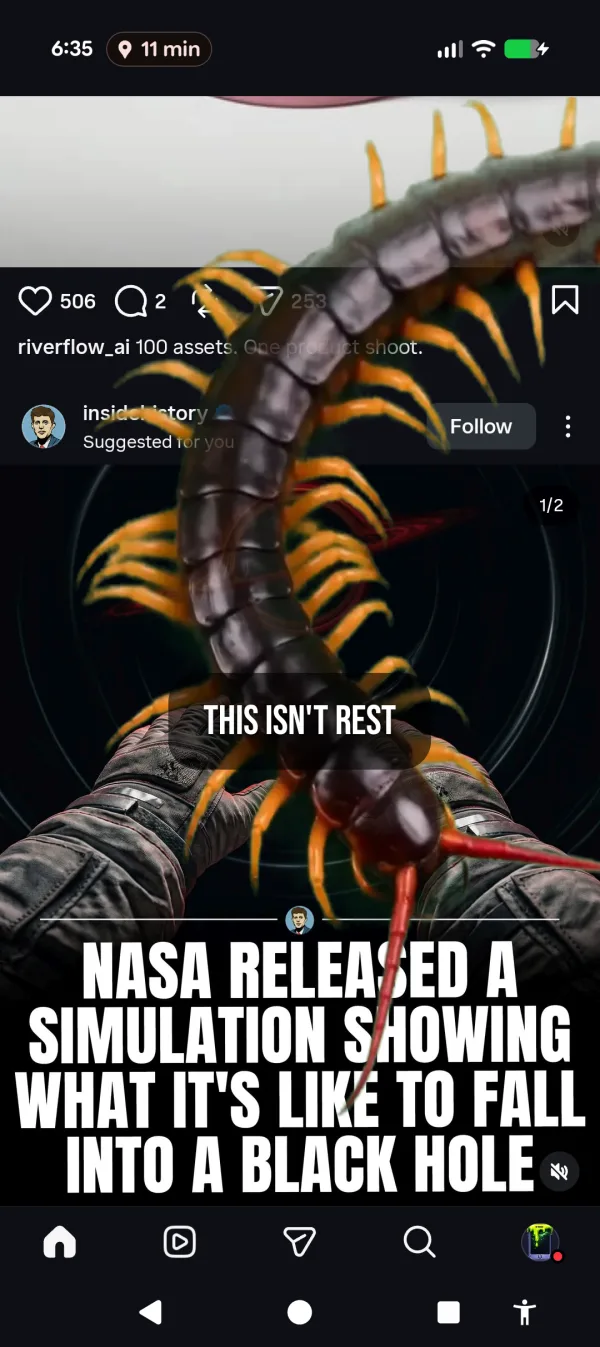
Cursed Screen does this directly. After a grace period, the phone’s screen fills with visual overlays — glass fracturing, a crimson glow, crawling insects. The phone still works. You can still scroll. But the visual reward is degraded. The dopamine hit from opening TikTok is contaminated by the discomfort of looking at a screen that looks broken.
Open the app to dodge the task and the reward’s contaminated — insects crawling over a feed that looks broken.
When the escape route becomes less rewarding than the discomfort of starting the task, your brain recalculates. Starting the task wins. Not because you decided to be disciplined. Because the alternative stopped being worth it.
Change the physical arrangement. Phone face-down on a shelf across the room. Not on the desk. Not in your pocket. Across the room. The avoidance loop needs the phone to be instantly accessible. Add 10 seconds of walking and the urge often passes before you reach it.
Use the 2-minute rule. When you feel the pull to check your phone, set a condition: “I’ll work for 2 more minutes, then I can check.” Two minutes is short enough that your brain doesn’t rebel. After those 2 minutes, set another 2. The phone pull fades as you engage with the task. This is a cognitive behavioral technique, not a hack. It works because it doesn’t fight the urge directly. It delays it.
The procrastination equation
Piers Steel’s procrastination equation: motivation = (expectancy × value) / (impulsivity × delay). Your phone scores perfectly on every variable. High expectancy (you know it’ll feel good). High value (novel, rewarding content). Low delay (instant gratification). And your impulsivity is already high because you’re avoiding a task.
The task scores terribly. Low expectancy (you’re not sure you can do it well). Low immediate value (the reward comes later). High delay (you won’t see results for hours or days). Your brain does the math and picks the phone. Every time.
You can’t change the task’s equation much. But you can change the phone’s. Make the phone less rewarding (visual deterrence). Make it less accessible (physical distance). Make the task less daunting (smaller first step). Shift enough variables and the equation flips.
Cursed Screen attacks the phone side of the equation. Free trial on Android. Subscribe monthly or annually, or pay once for lifetime access. It won’t organize your to-do list or teach you time management. It’ll make your phone a worse escape route so the work wins more often.
You have something to do right now. You know what it is. Close this tab and do it. If you end up on your phone instead, that’s the pattern talking. Change the pattern.
Reduce your screen time — without blocking anything
Cursed Screen makes your phone progressively uglier the longer you use it. No blocking, no willpower needed — you'll want to put it down.
Get Cursed Screen on Google Play