How to Do a Digital Detox That Doesn't Fail After 3 Days
Almost everyone who tries a digital detox relapses. Not because they’re weak — because a detox removes the apps without changing what makes the phone pull at you in the first place. The craving waits. When the detox ends, it’s still there.
Most digital detox advice treats it like a weekend project. Delete your apps. Go outside. Journal. Return on Monday refreshed and cured. In reality, the relapse happens Tuesday, the apps are reinstalled Wednesday, and by Thursday you’re scrolling more than before because the deprivation amplified the craving.
Here’s how to do a digital detox that actually sticks, based on what the research says about sustained behavior change rather than what sounds good in a wellness article.
Why most digital detoxes fail
Cold turkey creates deprivation. Deprivation creates craving. Craving creates relapse. This cycle is identical to crash dieting, which has a similar failure rate and for the same neurological reasons.
The short-term benefits of digital detoxes are real — reduced stress, better social interaction, improved mood. But they’re fleeting. The benefits drop off within days of going back online. A weekend detox is a vacation from your phone, not a treatment. Vacations end.
The other problem: cold turkey eliminates the useful parts of your phone along with the addictive parts. No GPS. No messaging. No banking. No work email. The cost of going phoneless for a weekend is real, and the cost accelerates the decision to end the detox early.
The detox that works: gradual reduction over 3 weeks
A 2025 randomized controlled trial found that three weeks of screen time reduction produced measurable improvements in well-being, depression, sleep quality, and stress. Not a weekend. Three weeks. And the participants reduced usage — they didn’t eliminate it.
Week 1: Cut the triggers
Don’t delete anything yet. Instead:
- Turn off all non-essential notifications (everything except calls, texts, calendar)
- Remove social media apps from your home screen (keep them installed, just not visible)
- Charge your phone in a different room at night
- No phone for the first 30 minutes after waking
These changes reduce the cues that trigger compulsive use. The apps are still there if you need them. You just stop being pulled toward them by badges, notifications, and proximity.
Week 2: Introduce friction and consequences
- Install ScreenZen (free) on your top 3 time-sink apps. The pause before opening breaks the autopilot.
- Set phone-free zones: no phone at meals, no phone in the bathroom, no phone during conversations.
- Install Cursed Screen with a 20-minute grace period. After 20 minutes of use, the screen starts looking wrong. This catches the sessions that survive the friction.
Week 3: Maintain and measure
- Check your screen time tracker. Compare this week’s average to Week 0 (before you started).
- If social media time is down 30%+, the detox is working. Hold the changes.
- If it’s down less than 20%, tighten: shorten the grace period, add more apps to ScreenZen, or move the phone to a more distant room at night.
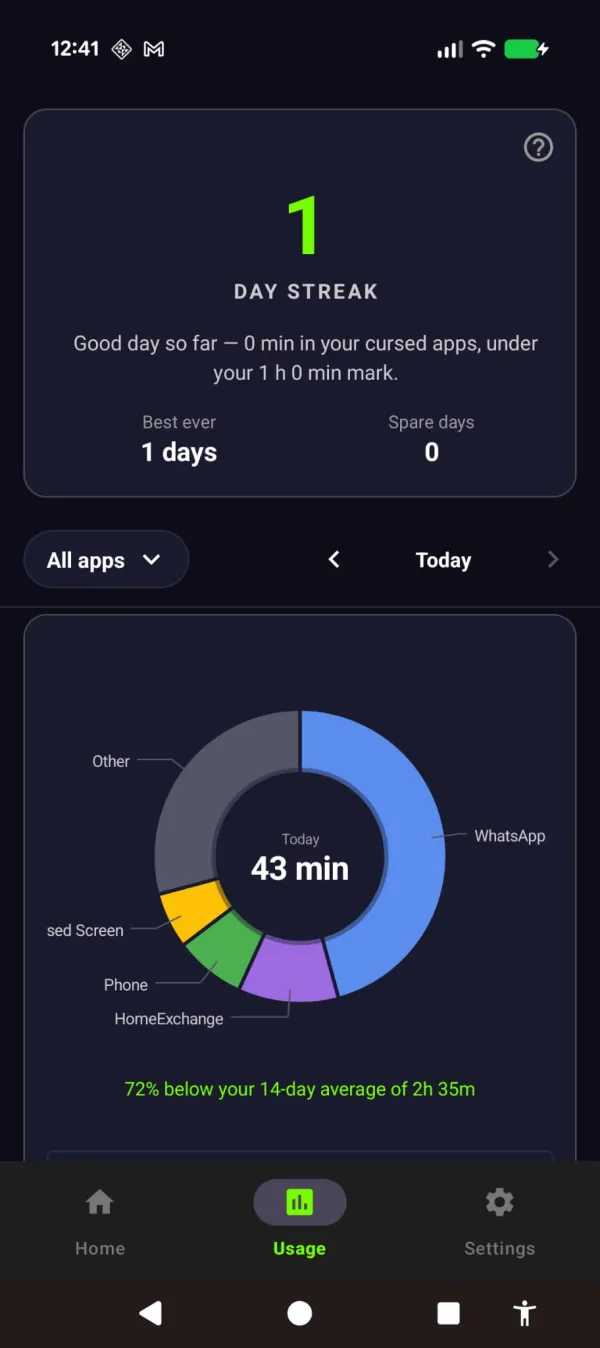
Week 3 is where you see it: the days under your limit, stacking up.
By the end of Week 3, the reduced usage should feel normal, not restricted. Your brain has had time to recalibrate. The withdrawal symptoms (restlessness, boredom, phantom phone vibrations) peak around days 3-5 and decline after that.
What to do after the detox
The detox isn’t the end. It’s the transition to a new baseline. The tools you installed in Week 2 stay installed. The phone-free zones stay phone-free. The notifications stay off.
The mistake most people make is treating the detox as a finite event. “I did my three weeks, now I can go back to normal.” Normal is the problem. Normal was 5 hours of screen time and a TikTok addiction. The detox succeeds when the new pattern becomes the new normal.
Keep Cursed Screen running permanently. It doesn’t require daily decisions. The phone just looks worse when you’ve been on it too long. On days when you’re disciplined, you barely see the overlay. On days when discipline slips, the overlay catches you. It’s a safety net that doesn’t require activation.
The positive mode — flashes of aurora and sunlight with “there’s magic out there” and “the world misses you” — serves as an ongoing reminder of why you did the detox in the first place. Not punishment. A pull toward the life you’re trying to build.
The detox you can actually sustain
The word “detox” implies a one-time cleanse. That framing is part of why digital detoxes fail. Your phone isn’t a toxin you remove once. It’s a permanent part of your life that needs ongoing management, like diet or exercise.
Stop thinking “digital detox.” Start thinking “digital diet.” Not a weekend of deprivation, but a sustained change in consumption that you can maintain indefinitely. Less dramatic. More effective.
Cursed Screen has a free trial on Android. Subscribe monthly or annually, or pay once for lifetime access. It’s not a detox app. It’s a permanent change to how your phone feels when you’ve been on it too long. The detox ends. The ugliness stays. That’s why it works.
Want a tool that does this automatically?
Cursed Screen makes your phone progressively uglier the longer you use it. No blocking, no willpower needed — you'll want to put it down.
Get Cursed Screen on Google Play